Sunday, January 18, 2009

Okay, okay--so this may or may not be absurdly long. Apologies.

I cannot quite get a handle on this strange little story. I’m intrigued, for sure… although I’m not entirely sure why, or about what. What I’m absolutely certain of, however, is that I do not fully understand what it’s about. That said—I’m going to give this whole thing a shot.

What struck me most in reading this was Woolf’s depiction of age throughout the three or so pages in which the story takes place. Particularly towards the end (on page 88 specifically—in her description of the couple “in that season which precedes the prime of youth”) I get the overwhelming sense that she’s trying to (no no… I’m sorry: Virginia Woolf doesn’t TRY to do anything. She DOES things. Sort of like Chuck Norris) make a point about the various stages of maturity and development that people go though while traveling throughout the world—much like our narrator is (literally) doing in the story, itself. While the story is, strictly speaking, told from a single person’s perspective, the exposition of people in various periods of life – the children of the narrator, the quasi-prime -of –youth- power- couple and the trashy old ladies who sound vaguely like my Nana on a week long Whiskey bender, among others—all in the same geographical location makes me wonder about… well, a lot of things.

I find it interesting that on a very basic level, this piece is somewhat retrospective—at least initially. Our hero Simon, who is reminded of an erstwhile, youthful love interest seems to marvel at the extent to which fate (ostensibly) or just good old fashioned luck played a significant role in the way his life turned out—inasmuch as it did not dictate the outcome, completely: “I’ve been thinking of Lily, the woman I might have married,” he frankly admits to the woman he actually did marry (presumptively years later). More than anything, I believe, Wolf is emphasizing the complete arbitrariness of this outcome as represented by Simon’s belief that his life’s most significant events lay contingent to the volition of…um, a dragonfly.

So, okay— how does this relate to my “age-claim?” Perhaps it doesn’t, save for in my own head. BUT. I guess what I’m maintaining is that Woolf is pointing out a) the speed with which our lives pass us by—making reference to children, the elderly, and everyone in between in such a small space (both in the geographical confines and decided “smallness” of the story) and b) the fact that as we grow older, things seem to…lose significance? At least smaller, more mundane (more benign?) things. I don’t really know how else to put it. It seems to me, though, that as the characters in this story progress in age, they become less concerned with the importance and meaning of individual moments.

For example—the young couple moseying about with a parasol is preoccupied with the subtle underlying meanings of individual words such that they take on more significance than they may have in actuality, and are arguably hyper-focused on the minutia of their language. Simon recalls his fixation on Lucy’s shoes, and as stated before on the significance of the actions of the dragonfly swarming around his head. Conversely, the older people that we see (both the two old women speaking gibberish and the old man speaking with a seeming disregard for the meaning or significance of his words) are not at all concerned with the meaning of individual moments, or individual words.

All things considered, what I got most out of this story was the idea that it’s somewhat foolish to ruminate on small things to a great extent… because doing so, as demonstrated by this story (for the reasons outlined above) seems to be an exercise in futility.

And now I'm officially rambling. So I'm going to quit while I'm ahead (inasmuch as I was, ever). Sorry for the length though--brevity and I are not friends.


"Kew Gardens" and the (Un)Importance of Words

While I was reading "Kew Gardens," I must've listened to at least fifteen different songs.  I can't tell you what any of them were, except that "I Am the Walrus" is coo-coo-coochoo-ing its way into my ears right now. The words don't matter, they just provide a backdrop for my thoughts.

In "Kew Gardens," several different couples go by. They all have something in common--they aren't there for the words, but they're not there for the flowers either. I don't imagine that anyone really goes to Kew Gardens for the flowers, though they are quite spectacular. Unless you're a botanist, the Gardens themselves simply provide a pretty background for whatever conversation or introspection you might be engaging in that day. Woolf seems to be suggesting in "Kew Gardens" that the words passing between the couples are as unimportant to them as the flowers themselves.

The first couple, a husband and wife, are so preoccupied with "thinking of the past," (85) that even their children don't warrant any attention other than an occasional head-turn from the woman (84). The man thinks back to another time in the Gardens, where one of the most important decisions of his life was made. Lily's answer to his marriage proposal, the actual "yes" or "no," isn't what Simon notices or remembers. Instead of the words, he hangs all of his hope on the wanderings of an aimless dragonfly who "went round and round: it never settled anywhere." (85) His wife, Eleanor, lost in thoughts of her past, recounts a time when an action, a kiss from an old woman, affected her more deeply than words ever could--"the mother of all my kisses, all my life." (85) The words that pass between the couple, these "falling words," (87) between all the couples, seem to have all the importance of strangers exchanging small-talk about the weather. They're the soundtrack of a walk through Kew Gardens, but the important things are the ghosts of the past--all the might-have-beens and actions of the moments that really affect us. Woolf is suggesting that words, though a necessary aspect of life, prevent us from fully reflecting on our thoughts, and jar us awake (87) to remind us of the canyon that exists between "one's happiness, one's reality." (85)

What's with the Snails?

One particular aspect of Kew Gardens that I was curious about was the distinction made between two very different worlds: namely, the world of the snail versus the world of the people wandering about the flower bed.
Woolf used a snail as the catalyst for her story in The Mark on the Wall, and once again, a snail plays a role in her prose. In Kew Gardens, Woolf leads the reader through the conversations and behaviors of various couples passing the flower bed as well as the progress of a snail within that same flower bed. While the people pass by with the same, “irregular and aimless movement,” (89) the snail appears to, “have a definite goal in front of it... objects lay across the snail’s progress between one stalk and another to his goal.” (86) In fact, it seems like the only character in the story who has any direction is the snail itself, plodding along in a flower bed surrounded by couples who are caught up by past memories and pointless conversations.
I was left to ponder the purpose behind telling the story from these two different perspectives, and I cannot say that I’ve reached a definite conclusion. By the end of the story, Woolf has brought together the two worlds of nature and people into a churning, swirling mixture of voices and colors and sounds. In the end, the two worlds are not separate entities, but a single—rather chaotic—mass. I am not really sure what to make of the story’s finish, and I was particularly stunned by the fact that my first reaction to the ending was, “But what happened to the snail?!” when obviously, I should be more concerned about the fact that the people in the story are lead astray by their own banalities and their struggle to sort out the implications of past decisions and present absurdities. I suppose the only contribution I have to offer are a few meager questions: What does it say about people if a snail in a flower bed seems to have more purpose and determination in a story than the humans? Was Woolf even considering that point, or have I missed an essential part of her message? Why does she seem to have such an affinity for snails?
Conclusively, all I can say is that whether it was Woolf’s intention or not, Kew Gardens made me wonder about the human condition to revel in the past, to say things that don’t really say anything at all, and to put great stake in things that are not worth much more than sixpence anyway.
Reading "Kew Gardens" made me think of Leopold Bloom, as this story resembles a "stream of life."  Woolf cleverly sets the reader among the "hundred stalks" in the flower bed, giving a fixed vantage point that allows only glimpses of humanity as the various characters pass through the garden (84).  It is the story's first passerby, Simon, that I found most congruent to Bloom, as his mind wanders back to his life fifteen years prior.  Simon's train of thought evolves into him speaking to his wife, Eleanor, but the transition is strangely punctuated.  Thinking back to his old flame, Lily, makes Simon realize that if he had married her, he wouldn't be in the garden with his family.  This leads him to ask Eleanor, "d'you ever think of the past?" (85).  But in the text, Woolf does not distinguish where his thinking ends and where his speech begins, other than with a dash: "I shouldn't be walking here with Eleanor and the children -- Tell me, Eleanor..." (85).  

Now, it may seem as though I'm making too much of this, a small piece of punctuation missing from a passage.  But the manner in which this utterance to his wife leaps forth from his train of thought betrays a strange moment of omniscience on the part of the narrator.  I decided to reread "Kew Gardens" twice more to make sure that, in fact, Simon's account is the only specifically omniscient moment for the narrator, by which I mean to say that the character's literal thoughts are given to the reader verbatim.  For the rest of the story, the narrator acts in a much more spectatorial role, picking apart the other characters' thoughts and dispositions mostly from their facial expressions: "The younger of the two men wore an expression of perhaps unnatural calm; he raised his eyes and fixed them very steadily in front of him while his companion spoke" (86).  

Because of this backgrounding on Simon's previous visit to the garden with Lily, I felt a closeness with him that was lost with the other characters; I understood his plight more than, say, the two "elderly women" who "piece together their very complicated dialogue" (87).  Other than my own feeling toward Simon, I certainly can't draw any conclusions about Woolf's work on the whole, so I'm going to hope that pointing out this anomaly may lead to someone else picking up the baton.  

Woolf on the Street!


I'm sure if anyone wanted to, they could find out where this is and who decided to spray paint Virginia Woolf on the side of a building in the first place. For me, though, it's a lot more fun to imagine some English majors (the opposite of a "typical" graffiti artist) painstakingly stenciling the photo of Woolf and sneaking out in the dead of night to make their own "Mark on the Wall." Pun obviously intended.

I'm not sure how to tag this as it's obviously not meant to be graded...Unless I get an A.

MB

Lost, Found, and then Lost Again in Translation

In "Kew Gardens," Woolf makes it starkly clear that a relative lack of experience with her work does not put us at a disadvantage, but instead allows us to see her illuminations "as a sleeper waking from a heavy sleep sees a brass candlestick reflecting the light in an unfamiliar way" (87). With cinematic precision, she details people, places, and plants, the last of which serve as a naturalistic metaphor for the novel experiences of the infancy of our species. Indeed, I’m afraid to lose my sense of innocent wonder about her work. Zen practitioners, for instance, often paradoxically declare that the goal of Zen is to return the mind to the state it was in when it was naive about Zen. Of course, our impressions of Woolf are “lighted” by things we’ve been taught about her, things we've overheard, and certain notorious pieces of common knowledge. Particularly, when we read writers such as Woolf, it's often tempting to mutter, "This is a suicide note."

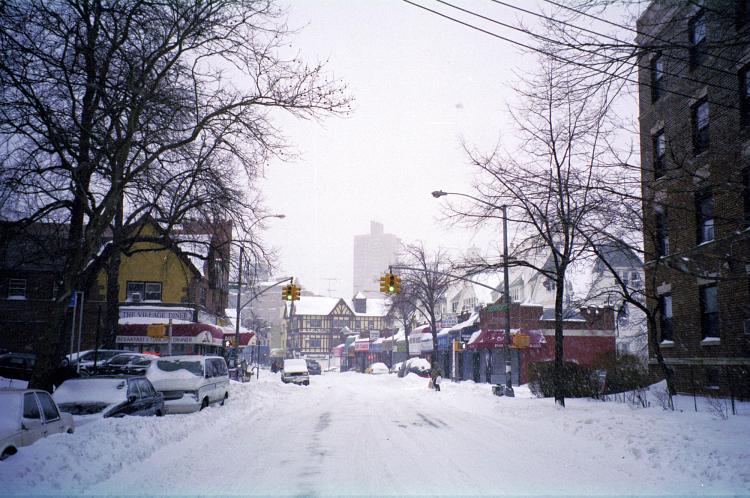
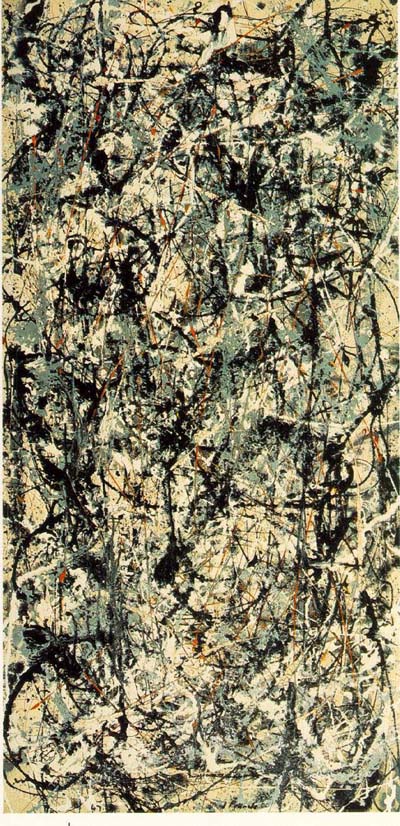
However, Woolf's piece demonstrates that such accusations of existential despair are not always baseless. The young man in the first couple she describes remarks that the fate of his love with his partner "Lily" seemed to rest precariously upon a dragonfly's decision on whether to land (84). While the descriptions of fluorescent flowers and youthful intellectuals ruminating on the purpose of existence clearly indicate that Woolf does not mean "Kew Gardens, Queens," the "omnibuses" and their interminable bustle suggest that we are also far from the ignorant bliss of the Garden of Eden (89). The world is no longer a blank canvas upon which we can paint, giving us time to think forever, to “reflect credit” upon us with thoughts that do not "directly praise" ourselves (Mark on the Wall, 79). Instead, the unstable planet has rendered our thoughts more like a Jackson Pollock painting. We cannot seem to find a beginning and end, a past and present, or an inner peace in the midst of a raging war.

On Knowing Greek Quite Well

Virginia Woolf manages a fascinating analysis of Greek dramas in her ironically titled, “On Not Knowing Greek.” Woolf displays her extensive knowledge of Greek drama and the ‘originals’ presented therein, claiming “we understand them more easily and more directly than we understand the characters in the Canterbury Tales. These are the originals, Chaucer’s the varieties of the human species.” The originals possess a certain authenticity in that they are not only first created here, but present the models still currently used in literature—used, for example, by Chaucer. Thus by definition, Chaucer is inherently more convoluted and less accessible. Reading Greek tragedies, we find that qualities possessed by these originals come through the text innately and do not require complex, wordy situations fabricated by the playwright, as found in many works today, to be coerced out. “But in the [pages of] Electra or in the Antigone,” Woolf explains, “we are impressed by something different, by something perhaps more impressive—by heroism itself, by fidelity itself.” Lastly, the realm of ancient Greece allows for larger-than-life occurrences by nature. Today, it is difficult to imagine what life would be like in ancient Greece when we view the world through the English realm familiar to Woolf. She related ancient Greece to modern Italy in that “small incidents are debated in the street, not in the sitting-room, and become dramatic; make people voluble.” This is not familiar to Woolf’s contemporary English(wo)men. This analysis allows Woolf to access ancient Greece from the proper plane, and we can as well with her help. I find that viewing the classic texts through this lens gives them a freshness and immediacy that Woolf recognizes and we do too when we know where to look.--Justine